
Annise Parker

MAYOR ANNISE PARKER, interviewed at City Hall in Houston, Texas, August 26th, 2010
 : You come out of the energy
 business: what’s different about the energy business today for Houston than it was in years past?
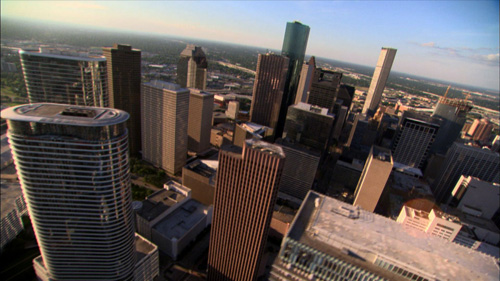
Houston has long been the headquarters for the international oil and gas industry, but more and more, the oil and gas industry is becoming the energy industry, and that includes green and renewable energy. And in fact, if you look at where a lot of the R&D money for renewable energy, you find that there are oil and gas roots there.
: So Houston’s often called the energy capital of the world: what’s your hope for what people will be calling it in the future?
I want to go from the oil and gas capital of the world to the energy capital of the world. And even farther, I want to be the green and renewable energy capital of the world. Now, we do have long oil and gas roots, and it has fueled our economy for a very long time. But we also have some unique challenges here in Houston, in terms of being the renewable energy capital, quite apart from our history in oil and gas.
We’re a city built on a hot, humid, swampy coastal plane. We’re probably the most air-conditioned city in the world. And we pride ourselves on that. We used to have a marketing campaign that said, “If you come to Houston in the summertime, bring a sweater!” (She laughs.) And it’s true, because we tend to chill our buildings down. Well, if you gonna tackle energy efficiency, you might as well do it in a place that is a profligate user of energy. And when you make a difference there, you can make a difference that’s significant.
We have embraced as a city, renewable energy. We are the largest municipal purchaser of renewable energy. About a third of our energy use for the city comes from renewable sources. We are rapidly growing on the list of energy efficient buildings, LEED certified buildings. I think we’re number eight. We want to be number one, and we’re pursuing it aggressively.
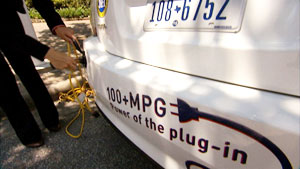 We are an automobile city, built on the horizontal, rather than the vertical, and we sprawl over 640 square miles, just in the city of Houston, our entire growth pattern built around freeways and the automobile. We want to be the most electric vehicle friendly city in America, and in the very near future, and we’re putting things in place to do that. We can be both what we were, and what we aspire to be, and we’re doing it.
: How come the city the number one purchaser of renewables? What led to that?
This is a conscious decision on the part of city leadership. This initiative was started by my predecessor in office who, interestingly enough, also came from the oil and gas industry, where he made the decision that we would purchase wind energy directly for the city and that we would enter into long term contracts to do that. I have continued that initiative, but I have also expanded on that. I have put in place a Sustainability Director for the City, where we’re not just looking at uh, green and renewable energy, but we’re looking at a whole host of sustainability initiatives for our city. And again, we’re a city that is about throwaway. Reinventing ourselves, what’s new, we don’t value the old, we use something, we use it up, we throw it away. Now we’re rethinking that whole attitude. And it’s being embraced very successfully by Houstonians.
: What are some of the practical benefits for Houston residents of going green?
We are the fourth largest city in America. By world city standards, we’re not that large. But we are still a very large urban area, with significant challenges in air quality, with significant challenges in moving goods and people around the region because of traffic congestion. We have issues with water quality and we are a significant consumer of energy because we’re such an air-conditioned area.
Anything that our citizens can do in any of those areas saves them money, impacts the carbon footprint we have for this area. And anything that we can do to reduce our carbon emissions and bring down what has often put Houston on the list of one of the worst air quality cities in America, benefits all of us.
: I think a lot of people around America would be surprised to hear that the state is doing so well in terms of wind energy and that Houston is doing so well in terms of purchases of renewables. Is there prejudice against Houston, against Texas? And why is that wrong?
I don’t know about Texas, but the rest of the United States has, I think, a very mistaken image of Houston. And it’s been a source of frustration for me, but it’s also been an opportunity for me as a new Mayor, to come in and talk about the Houston as the rest of the world may see us, and the Houston as we really are. Houston has always been a place where, if you can imagine something, you could probably achieve it. We are the place that invented indoor baseball. We built the first dome stadium because it was really too hot to play baseball in August in Houston. We built the dome stadium. We planted real grass in the stadium. When that grass wouldn’t grow, we went out and invented Astroturf. Not something I really want to be remembered for, but there it is. We are fifty miles from the ocean, and with the Port of Galveston was destroyed, Houston began to think about how we could take over as one of the premier ports in the United States. We are now the largest foreign tonnage port in America, because we took a small river we call Buffalo Bayou, enlarged it, dredged it out, to make the Houston Ship Channel. It’s always been about what are the possibilities. And we’ve always been willing to try to trump what nature has given us. And that was a hot humid climate, being 50 miles from the ocean, etcetra.
One of the things that inspires Houstonians, that we talk about a lot, is that the very first word heard from the surface of the moon, was Houston. “Houston, Tranquility Base here, the Eagle has landed.” We can imagine it, we’re always willing to try to get there. Well, I can imagine a Houston in which half the energy we use or more, comes from renewable sources. I can imagine a Houston where, if we’re gonna be a car city, that’s great, but those vehicles are going to be non-polluting electric vehicles. I can imagine a Houston where we have a fully built-out mass transit system that will move us around the city. And those are initiatives from the City itself. Our citizens in Houston are just as engaged in those kinds of efforts, and we want to set the tone, but we want to bring them into it as well.
I know when I was a member of the Houston City Council, we made an initial investment in Priuses for the city of Houston, when they were first coming out on the market as the hybrid vehicles. We decided to help build the market by making that investment. I recently inked a deal with Nissan to help build the market for the Leaf, an all-electric vehicle that really looks and feels like a car. We’re going to have to buy vehicles anyway, let’s look to the future and where we want to go and help create the market instead of just respond to the market. That’s the Houston way.
: To what extent can Houston “go it alone” without a national energy policy?
Houston has made great strides in going it alone now. We already receive about a third of our energy from wind sources. We actually were exploring last year the creation of a solar plant to contribute another tranche of energy needs for the city of Houston. It would be much easier for us to have a national policy that encourages green renewable energy, but we have found a way to do what we need to do to make a step into the future, with the current conditions. Certainly it would be easier to have some help in that.
: What are the resources in the region that you can rely on to make it into the alternative energy capital of the world?
 Houston’s whole culture and tradition is about thinking of something that you think ought to happen and seeing if you can get there, so we’re really focused on being self-reliant and trying to do it ourselves. Obviously we’re happy to partner with others, and we’d love to see the Federal government and the State government come in line to help that. Houston has two premier research universities and a number of other universities and two public institutions, at least three private institutions. Rice University and the University of Houston are both engaged in energy research. Rice University as a pioneer in nanotechnology, and University of Houston as a pioneer in superconductivity. And they’ve just launched a new facility on their campus that is focused on doing R & D with energy products, renewable energy. Right now I know they’re signing deals to test wind turbines, to try and improve the technology there. So we’re also using our local brainpower to move us forward.
: What would you like to see happen by the end of your first term (as Mayor)? What are the milestones that would show that you had moved things forward?
I’ve been a Houston city council member, I’ve been City Controller and now I’m Mayor, the first person in Houston’s history to actually walk through those steps. So I’ve had a lot of time to examine what we do well as a city, what we do less well. We’re going to significantly increase the amount of renewable energy that we as a city use. But it’s not enough for the city of Houston to lead. We’ve been leading on renewable energy, we’ve been leading on alternative fuel vehicles, or hybrid vehicles, we’ve been leading on trying to improve air quality. The City of Houston has been testing alternate, or clean diesel, for a very long time. We’re a big fleet operator, we might as well try to figure out if there’s a way to keep our costs low and clean the air. My challenge is convincing the rest of Houston to change how they think, to “I can lead by example,” and that’s what we’re doing in the city and we’ve been doing it for a long time. But the next step is to get that message out to the rest of Houston.
To get them thinking the same way, and so through my new Office of Sustainability, my own individual efforts and the example that the city is going to set, we hope that we can change the entire mindset of Houston. We’re seeing success in that, in the number of buildings that are LEED certified for energy efficiency. Again we want to go from 8 to 1. We want to lead in LEED. We want to lead in the amount of renewable energy that not just the city purchases, but that all of our consumers here in this area purchase.
We want our own Houstonians to become more engaged with the green future. We want them to recycle. We’re rolling out across the city a single stream recycling program in the city of Houston, and we want to get it in every household in the city as rapidly as we can. I’d love to be able to accomplish that finally in the first term, and then we’re going to focus on putting more into those green recycling bins as soon as we get them out there.
We have to create a more ecology-minded youth culture, as well. I’m a child of the 70s, I graduated from college in the 1970s, and you know, the early Earth Day and loving Mother Earth. I have my own kids now, my youngest is in high school. I would have thought that by this time, recycling would be absolutely second nature to kids. It’s not. It has to be constantly reinforced. The messages are not there, that should be there in our school, in our culture, in our community. And I want to work hard to put those in place. So that twenty years from now, we don’t have to do it all over again.
: What have you found to be the most effective messages to get your fellow-citizens to think in a more green, more sustainable way?
It’s always important for us to lead by example, and I don’t think that’s just Houston, I think anywhere, which is why the city of Houston started down this road first, before we asked other people to do it. And now we’re trying to engage with the broader community. There also has to be an economic message. We’re a city of business. Our long time slogan is, “the business of Houston is business.” And so you have to make the business case. And maybe it might cost more in the short term, but let’s look over the long term and do a real cost-benefit analysis of the changes that we’re asking people to make. And uh, we can have that discussion before we ever get to, “And let’s do it because it’s the right thing.” We’re going to do it because it’s the smart thing, because it makes business sense, and it’s the right thing.
: If you look around the city, what are some of the most concrete things that are evidence of a change in the way of thinking towards a more sustainable future?
If you look at how we as a city are building our own facilities, they are greener, and more sustainable in their own technology. If you look at city buildings as you see us going forward with solar panels on rooftops, and all the things that we’ve done… let me tell you one of the things that I’m most excited about. And it’s something that seems really small.
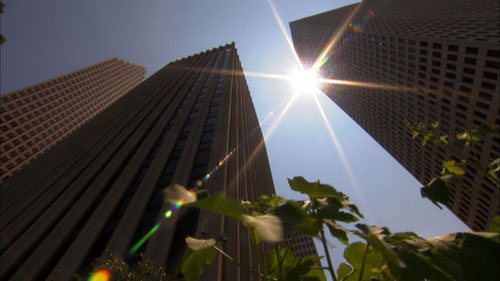 We have a City of Public Works building that is just a few blocks away from where we are now. And my new Sustainability Director encouraged the city employees in that Public Works building to plant container gardens on a city sidewalk, and planted them in the middle of June, it’s hot as heck outside, in the absolute worst conditions to grow anything alive. I mean it’s all cement and glass and steel with 98 degrees baking down on those little container gardens. There are these big pots with flowers and vegetables and herbs in them. And uh, our employees love their container gardens.In just a matter of weeks, they have become urban gardeners, people who have never even thought about sticking their fingers in dirt. Is it gonna change the way… anything big in Houston? No. But is it a symbol to the entire city of what you can do in very difficult circumstances with virtually no money. And then to take that message and say, “Let’s spread this green message all over the city. If we can do it, you can do it.” And the energy and enthusiasm that my employees have exhibited as they’ve embraced this effort, and the camaraderie that’s grown up around it, is the same thing that I’ve seen as we have planted community gardens across the city, the much more formal, large-scale gardens.
And so we’re sending a message that it doesn’t have to be a big, expensive or high-tech project, it can be something as simple as getting together with your neighbors, finding a wash tub and filling it with dirt, and growing something you can eat, and touch and smell, that can make a difference in the world. And it’s a small thing, it’s not the big projects, but that’s the one I’m having the most fun with. Because that’s the one I can go talk to kids about, that’s the one I can talk to their parents about, and that’s the one that will plant the seed that’ll last with them.
: As a Mayor of a city here in the States, what do you see happening in China, in energy development, or air pollution, that is of interest to you? As something to follow… or something not to do.
China is the absolute economic juggernaut out there that is growing in intensity. Just in a trip from the airport in Shanghai to my hotel, I counted more construction cranes than exist in all of south Texas. The smallest city I visited, I believe, was Beijing, which is something like seven times the size of the city of Houston. Huge economic growth, great consumer demand, gridlock traffic, horrible air pollution, but an understanding that the world is going to move forward. It’s going to happen. And it behooves them to make whatever decisions they can, and the investments they need to make, to meet that change in their culture and moving into a market economy.
What I saw is, we need to be engaged with China, we need to be engaged from an economic standpoint, but we also need to be engaged in the high-tech cutting edge technology discussions, whether we develop them or they develop them, the pressures in China to move into the renewable energy future are much higher than they are here. And a lot of the advances may very well take place there, because of the extreme pressures, and the willingness of the Chinese central government to help push that development and that research along.
I intend to focus some of a certain amount of my energy going forward on making sure we stay engaged with China, and that our Houston business community is actively seeking bilateral trade with China. Because a lot of what our future is going to be is being developed right now in Chinese factories and in the decisions that are made in those major cities in China.
HEAR FROM THE EXPERTS:

|
|

|
|
|
- 1 of 2
- ››


 <
< <
< <
< <
<